
5 minute read | 06/02/2026
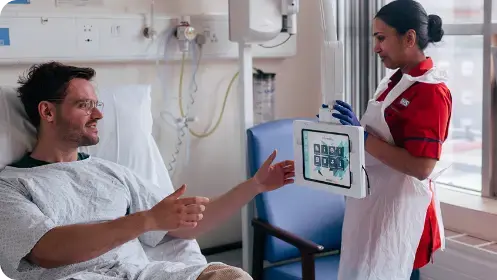
Trust is the bedrock of the NHS. Without the public's confidence in the quality of care, the professionalism of clinicians and the effective stewardship of public funds, the entire system begins to falter.
The ‘transparency and patient empowerment’ pillar of the NHS 10-Year Plan is a direct response to this need, recognising that modern healthcare requires moving beyond a paternalistic model to one built on shared decision-making and mutual accountability.
This pillar demands that NHS Trusts not only deliver high-quality care, but also openly demonstrate their performance, listen to patient voices and actively involve individuals in their treatment plans. Technology is the primary vehicle for achieving this.
It’s the tool that can convert high-level principles of openness into daily, operational realities, ensuring data is used not to hide performance, but to illuminate it for both internal leaders and the patients they serve.
SPARK Fusion® is explicitly designed to foster this environment of digital transparency, using integrated tools to close the loop between service delivery, performance tracking and the patient's lived experience.
The strategic case for digital transparency
The health sector has historically struggled with transparency due to complex, siloed data systems. It’s difficult to be transparent about performance when a Trust’s data is fragmented, slow to access and requires significant manual effort to compile. This lack of clear, timely information hinders internal accountability and erodes external trust.
True transparency requires a real-time, objective view of operational and clinical performance. When this view is easily accessible to leaders, it fosters a culture of accountability. Trusts are compelled to act on areas of weakness and reinforce areas of strength.
When this view is also shared with patients, it fosters empowerment, allowing them to participate meaningfully in their care and provide feedback that genuinely drives improvement. The Plan encourages this via Provider league tables, patient experience metrics and quality reporting via the NHS App and national platforms.
The goal is to shift the perception of the NHS from a closed institution to an open learning organisation. This requires a digital layer capable of handling diverse data streams and presenting them in formats beneficial to everyone, from the C-Suite to the bedside patient.
1. Driving internal accountability with performance dashboards
For Trusts to be accountable to the public, they must first be accountable internally. SPARK Fusion® facilitates this through powerful, configurable performance dashboards that provide clinical and operational leaders with a single, objective source of truth.
How SPARK Fusion® dashboards deliver accountability:
- Real-time KPI tracking: Leaders can track crucial metrics, such as delayed transfers of care (DTOC), elective waiting list times, nurse-to-patient ratios and infection control rates in real time. The platform integrates data from EPRs, bed management systems and other clinical sources, presenting a consolidated view that quickly highlights bottlenecks and service variances. SPARK Fusion® offers dashboards, patient-facing feedback, experience reporting and data transparency tools.
- Granular performance drilling: Unlike static reports, SPARK Fusion® dashboards allow users to drill down from high-level Trust performance to specific ward or team performance. If A&E waiting times are spiking, leaders can immediately investigate the contributing factors, such as the efficiency of the clinical triage pathway or the speed of diagnostic reporting. This capability makes accountability specific and actionable.
- Transparency in resource allocation: The dashboards can link operational metrics with resource usage, enabling transparent oversight of staffing and equipment. This directly supports the ‘doing more with less’ pillar by ensuring resources are deployed effectively and demonstrably.
This level of detailed, instant transparency empowers leaders to take proactive corrective action, demonstrating internal accountability that is the necessary precursor to external trust.
2. Enabling patient empowerment with feedback tools
Transparency must flow both ways. It’s not enough for the Trust to know how it’s performing; the patient must also feel heard and informed. Patient feedback tools from SPARK Fusion® are crucial for fostering a culture of continuous listening and external transparency.
How SPARK Fusion® tools empower patients:
- Continuous feedback channels: SPARK Fusion® integrates various feedback mechanisms (e.g. SMS surveys, digital comment cards, in-app polls) into the patient journey. Instead of relying on annual surveys or isolated PALS contacts, the Trust receives continuous, real-time feedback on specific touchpoints, from the ease of booking an appointment to the quality of the hospital meal or the discharge process.
- Shared decision-making support: Empowerment means giving patients the information and tools needed to participate in their care. The SPARK Fusion® patient portal provides patients with secure access to their own clinical letters, care plans, test results and educational resources. This shifts the dynamic, allowing them to arrive at consultations informed and ready to participate in shared decision-making with their clinician — a key ambition of the national plan.
- Transparency in action: When feedback is captured, the platform allows the Trust to demonstrate that it has been received and acted upon. For example, if feedback highlights an issue with wayfinding, the Trust can use SPARK Fusion® to rapidly deploy digital signposting updates and then use the same platform to communicate the change back to patients, reinforcing the commitment to listening and improving. The platform supports measuring progress through patient experience metrics like Net Promoter Score (NPS), satisfaction surveys and Patient-Reported Outcome/Experience Measures (PROMs/PREMS).
This continuous feedback loop turns a passive patient into an active partner, which is the definition of patient empowerment.
The trust dividend
By implementing a unified digital platform like SPARK Fusion®, NHS organisations move beyond simple compliance and start building a genuine culture of trust.
- Trust between clinicians and leaders: Clinicians can trust that performance data is accurate and not punitive, allowing them to confidently engage in quality improvement discussions.
- Trust between patients and Trusts: Patients trust a provider that’s not only transparent about its performance but also actively solicits, responds to and acts upon their feedback. They trust a provider that treats them as a partner, not merely a recipient of care.
For Trusts, the technology they choose must serve as a bridge. It must link granular operational data with the patient’s voice, ensuring that every decision made, from strategic planning to daily ward routines, is informed by both the metrics of performance and the human experience of care.
This commitment to openness and engagement is the future of NHS service delivery.
Ready to build trust through actionable data? Download our guide today for the practical roadmap to deploy real-time dashboards and patient experience metrics, turning the 10-Year Plan vision into a transparent reality.


Related articles
-2-1.png?width=386&height=180&name=Stock%20images%20(4)-2-1.png) Company News
Company News
SPARK TSL Partners with Patients Know Best
SPARK TSL is delighted to announce partnership with Patients Know Best (PKB), a social enterprise and ...
 Healthcare Industry
Supporting Healthcare Innovation at Stockport NHS Foundation Trust
As part of our ongoing mission to transform the healthcare experience for both patients and staff, SPARK TSL ...
.png?width=386&height=180&name=SPARK%20TSL%20x%20CardMedic%20(2).png) Healthcare Industry
Healthcare Industry
SPARK Fusion® & CardMedic Transform Bedside Communication
Stepping Hill Hospital, which serves a population of 350,000 across Greater Manchester, the High Peak area of ...
75% of patients want digital healthcare services
So let’s work together to give it to them, all while optimising NHS processes.
