
7 minute read | 06/02/2026
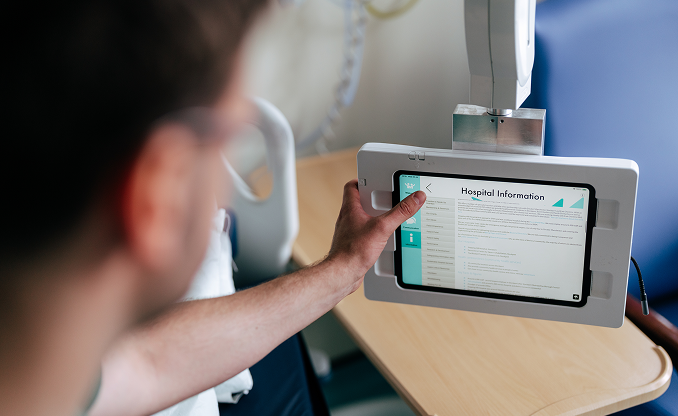
The NHS 10-Year Plan sets out a clear vision.
It’s about shifting care closer to home, reducing unnecessary hospital attendance and releasing pressure on acute services. But achieving this transition requires more than ambition. It requires an infrastructure that enables clinicians, patients, community providers and Trusts to stay connected, informed and supported at every step of the care journey.
The move from hospital-based treatment to community-led care has become essential, not optional. Demand for urgent and emergency care continues to rise, workforce pressures intensify and population health needs become more complex. To maintain a sustainable system, NHS organisations must find new ways to deliver safe, personalised and proactive care beyond the hospital walls.
SPARK Fusion® acts as a core enabler of this shift, supporting Trusts in redesigning patient pathways, enhancing outpatient management, strengthening virtual care delivery and ensuring a seamless digital front door that works for every patient.
By integrating communication, engagement, education and data flow into a single platform, Fusion empowers staff and patients to manage more care in the community without compromising quality or experience.
This article explores how the transition from hospital to community is already taking shape, the barriers Trusts must overcome and how SPARK Fusion® is supporting the NHS in delivering care where it truly matters most.
The strategic imperative behind shifting care to the community
NHS England’s 10-Year Plan highlights the need to deliver more care in the community, closer to home and through digital-first pathways to reduce pressures on acute settings. The Plan emphasises the role of virtual care models, digital outpatient reforms and integrated community services in creating a system that’s both sustainable and centred on patient needs.
This aligns with broader national directives, including the Delivery plan for recovering access to primary care and the urgent and emergency care recovery strategy, both of which point towards community-first models.
The rationale is clear:
- Reduced hospital demand: By managing long-term conditions, post-discharge support and outpatient activity closer to home, Trusts can focus acute resources on those who need them most.
- Improved patient outcomes: Early intervention, education and community monitoring help prevent deterioration and avoidable admissions.
- Cost efficiency: Community-based models are more sustainable and reduce reliance on high-cost bed capacity.
- Better patient experience: People want flexible, convenient care that fits around their lives.
However, while the vision is nationally defined, the ability to operationalise it varies significantly across Trusts and regions.
This is where technology becomes essential.
The barriers to shifting care without the right digital infrastructure
Although the NHS is committed to community-first care, several challenges can stall progress:
Fragmented digital tools
Different systems for correspondence, education, patient monitoring and appointment management make it difficult to maintain continuity once patients leave the hospital.
Limited integration across services
Community teams, outpatient staff and acute clinicians often work in disconnected systems, making pathway management inefficient and unsafe.
Information asymmetry
Patients can only manage more care at home if they have access to reliable, accessible and understandable information.
Digital exclusion
Digital adoption must support all patients, not widen inequalities. Platforms must be inclusive, adaptable and usable by people with different levels of digital confidence. SPARK Fusion® integrates with interpreter services like CardMedic to ensure no message gets lost in translation, supporting better community care.
Administrative burden on staff
If virtual and outpatient pathways create new tasks for clinicians rather than removing them, adoption becomes difficult.
SPARK Fusion® addresses each of these barriers.
How SPARK Fusion® enables the shift from hospital to community
SPARK Fusion® provides the digital infrastructure NHS organisations need to transition safely and confidently from hospital-centred to community-centred care. The platform supports integrated communication, patient education, staff workflows, virtual pathway navigation and real-time feedback — all from a single touchpoint.
Below are the core ways SPARK Fusion® supports the community care agenda.
1. Enabling outpatient transformation
Redesigning outpatient pathways is a core part of the 10-Year Plan. SPARK Fusion® enables Trusts to:
- Provide digital communication tools back to Trust staff
- Support multi-language content delivery to improve understanding
- Share educational content that reduces the need for unnecessary follow-ups
- Support pre-op and post-op guidance to reduce DNAs and preventable readmissions
By ensuring patients understand what to expect and what to do before and after outpatient activity, SPARK Fusion® helps keep care flowing safely from the hospital environment into the community. This capability is key to enabling outpatient, virtual consults and self-management that shift care out of the hospital.
2. Supporting virtual wards and remote monitoring
Virtual wards are central to keeping people safely at home while still under clinical observation. SPARK Fusion® strengthens virtual ward pathways by:
- Providing clear patient instructions and condition-specific education
- Offering a digital touchpoint for updates, escalation and guidance
- Streamlining communication between community teams and hospital clinicians
- Integrating with the EPR to enable virtual follow-up and remote monitoring post-discharge, freeing beds and reducing overstay
By ensuring patients and families feel confident managing care at home, SPARK Fusion® reduces avoidable readmissions and speeds up discharge planning.
3. Enhancing patient self-management and empowerment
For care to move into community settings, patients need more than access to services; they need the knowledge and confidence to manage aspects of their care independently.
SPARK Fusion® includes tools that:
- Deliver condition-specific education modules
- Provide videos, digital leaflets and step-by-step guidance
- Offer accessible content formats for different literacy levels
- Ensure continued engagement after hospital discharge
This empowers patients to play an active role in their care, which is essential for sustainable community-first healthcare.
4. Building a seamless digital front door
The NHS 10-Year Plan highlights the need for a simplified digital experience that guides patients through the right pathway at the right time.
SPARK Fusion® acts as a digital front door that:
- Helps patients access trusted information
- Connects them to community or acute services when required
- Reduces reliance on switchboards and manual clinical triage
- Facilitates self-service bookings and triage questionnaires
A digital front door isn’t just a convenience. It reduces unnecessary hospital visits, improves patient satisfaction and supports better community signposting.
5. Strengthening communication across integrated care systems
The shift from hospital to community requires collaboration across acute, community, mental health, social care and primary care services.
SPARK Fusion® supports this by:
- Offering real-time updates
- Standardising information sharing
- Supporting multi-service pathways
- Providing consistent digital information across localities
For ICSs, this means patients receive joined-up care whether they’re at home, in clinic or in hospital. This directly supports the IHO (Integrated Health Organisation) model by linking to a single patient record, so community clinicians see hospital data.
A practical example: smoother discharge and safer recovery
One of the most immediate benefits of a community-first model is faster discharge with better support at home. With SPARK Fusion®, Trusts can provide:
- Discharge instructions
- Warning signs and escalation routes
- Community support information
- Rehabilitation and recovery videos
Better discharge education reduces readmissions, frees bed capacity and improves long-term outcomes, directly supporting NHS efficiency goals. Specifically, Fusion integrates with the EHR to surface discharge-readiness metrics at the bedside and leverages integrations to find suitable care facilities.
The outcome: Care delivered where it matters most
By enabling better outpatient management, stronger virtual care, clearer patient education and seamless communication across care settings, SPARK Fusion® helps the NHS deliver on one of its most significant and strategic ambitions.
The shift from hospital to community isn’t simply a service redesign. It’s a fundamental transformation of how the NHS supports patients throughout their lives. SPARK Fusion® gives Trusts the tools, insight and digital infrastructure required to deliver this vision safely, sustainably and at scale.
As demands on acute services continue to rise, the organisations that adopt flexible, integrated and patient-centred digital solutions will be the ones positioned for long-term success.
SPARK Fusion® supports that future, bringing care closer to home and improving outcomes for every patient, transforming patient care as early as this winter.
If you’re ready to begin turning the 10-Year Plan vision into action today, download our guide for a practical roadmap for implementation, from pilot to system-wide scale.


Related articles
 SPARK® Fusion
SPARK Fusion® Addresses NHS Challenges from Lord Darzi’s Report
In a recent independent investigation led by Lord Darzi, a number of pressing challenges currently faced by ...
 Charity
Our Team Increases Charity Exposure at The Royal Free Hospital
The Royal Free London NHS Foundation Trust is one of the UK's biggest Trusts, caring for more than 1.6 ...
-1.png?width=386&height=180&name=Blog%20stock%20images%20(1244%20x%20540px)-1.png) Company News
Company News
SPARK TSL Launches Games to Enhance Patient Well-being
Improving patient well-being through the SPARK® Platform Being in hospital can be a challenging and stressful ...
75% of patients want digital healthcare services
So let’s work together to give it to them, all while optimising NHS processes.
